中文User Login

Exhibitions


Current Exhibitions>

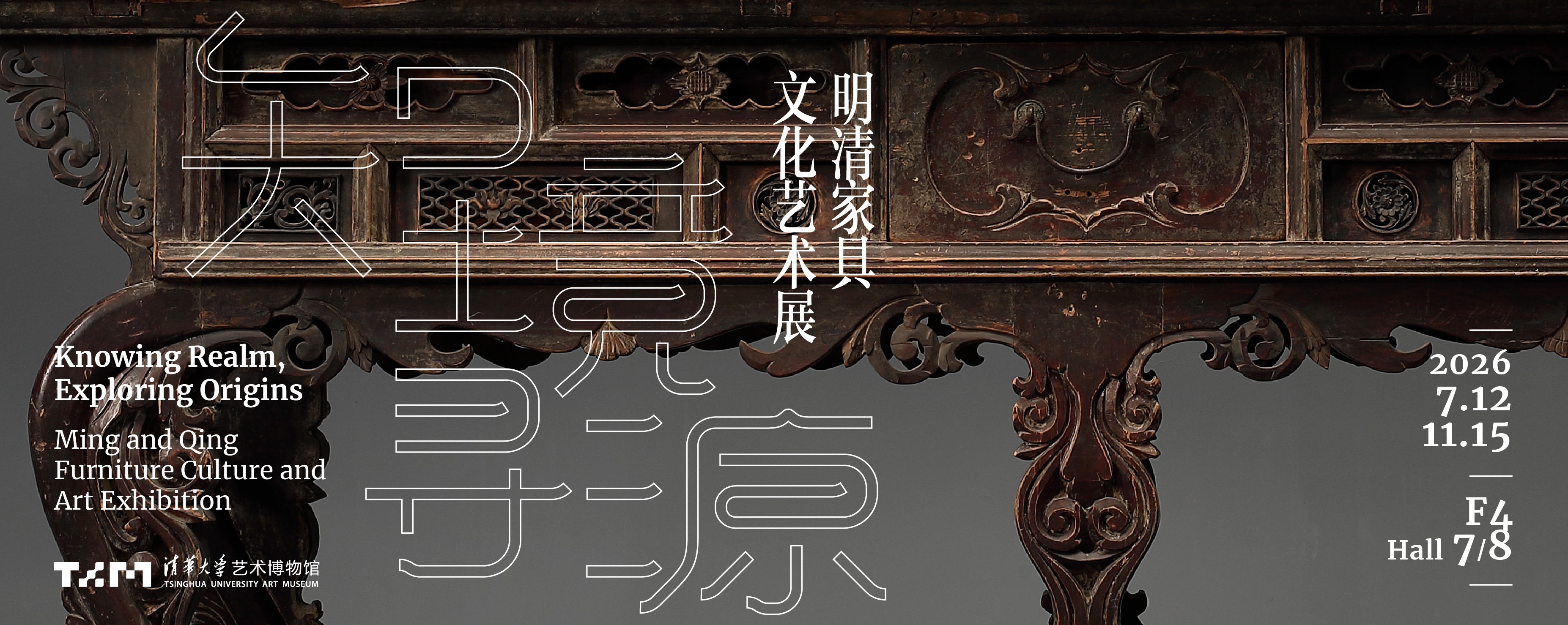
Knowing Realm, Exploring Origins: Ming and Qing Furniture Culture and Art Exhibition

Exhibition Info
Exhibition Period    12 July 2026–15 November 2026
Exhibition Venue    Exhibition Hall 7\8, Fourth Floor, TAM
Chief Director    Lu Xiaobo
Chief Artistic Director    Deng Yan
Academic Director    Fang Xiaofeng
Exhibition Supervisor    Wang Chenya Pan Xuhui
Academic Consultant    Yu Lizhan Liu Tiejun Su Dan Hang Kan Shang Gang Pu Anguo (Listed in order of surname stroke count)
Curators    Xu Xiaochuan Sun Yiwei
Project Supervisor    Sun Yiwei Xu Xiaochuan
Design Supervisor    Wang Peng
Visual Design    Wang Peng Wang Meiyi Pan Yuqing
Display Design    Liu Huijian Chen Yiru Liang Jing Ding Haoran
Exhibition Team    Gao Ning Zhao Chen Gao Ziming Li Jianwei He Zhiyuan Fu Liran Liu Qianxun Wu Wei
Publicity Team    Liu Yaomeng Zhou Xinxin Xiao Fei
Education Program    Wang Ying Zhou Ying Wang Wenhui Zhang Ruiqi
Sponsorship Management    Zhang Ming Zhang Xiao
English Translation    He Zhiyuan
Host    Tsinghua University Art Museum
Co-organizers    Department of Environmental Art Design, Academy of Arts & Design, Tsinghua University
    Furniture Design Research Institute, Academy of Arts & Design, Tsinghua University
    C.L.Ma Classical Furniture Museum
Academic Support    Zhuangshi (Decoration) Magazine Furniture & Interior Decoration Magazine
Sponsor    The Robert Chang Art Education Charitable Foundation
Exhibition Profile

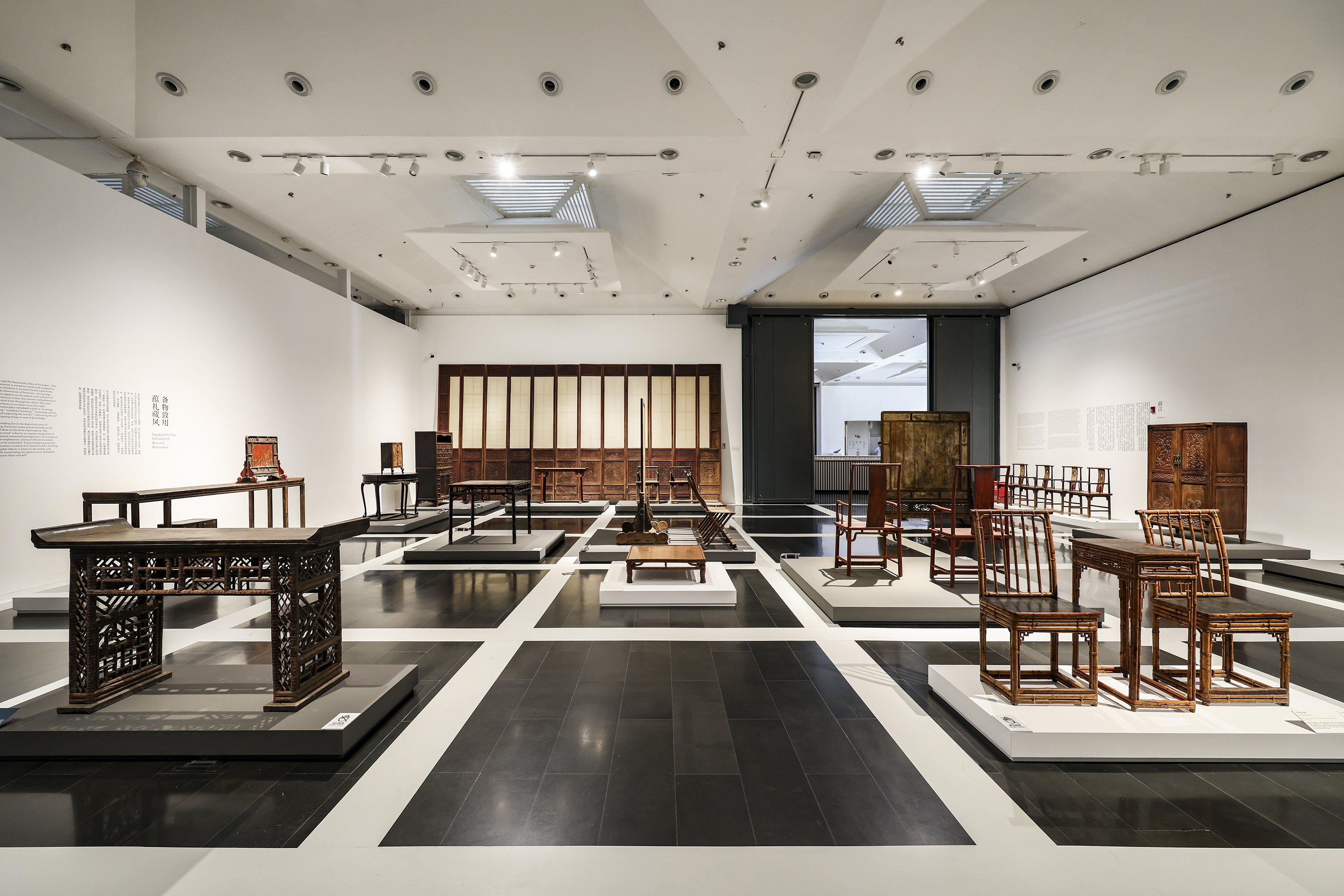
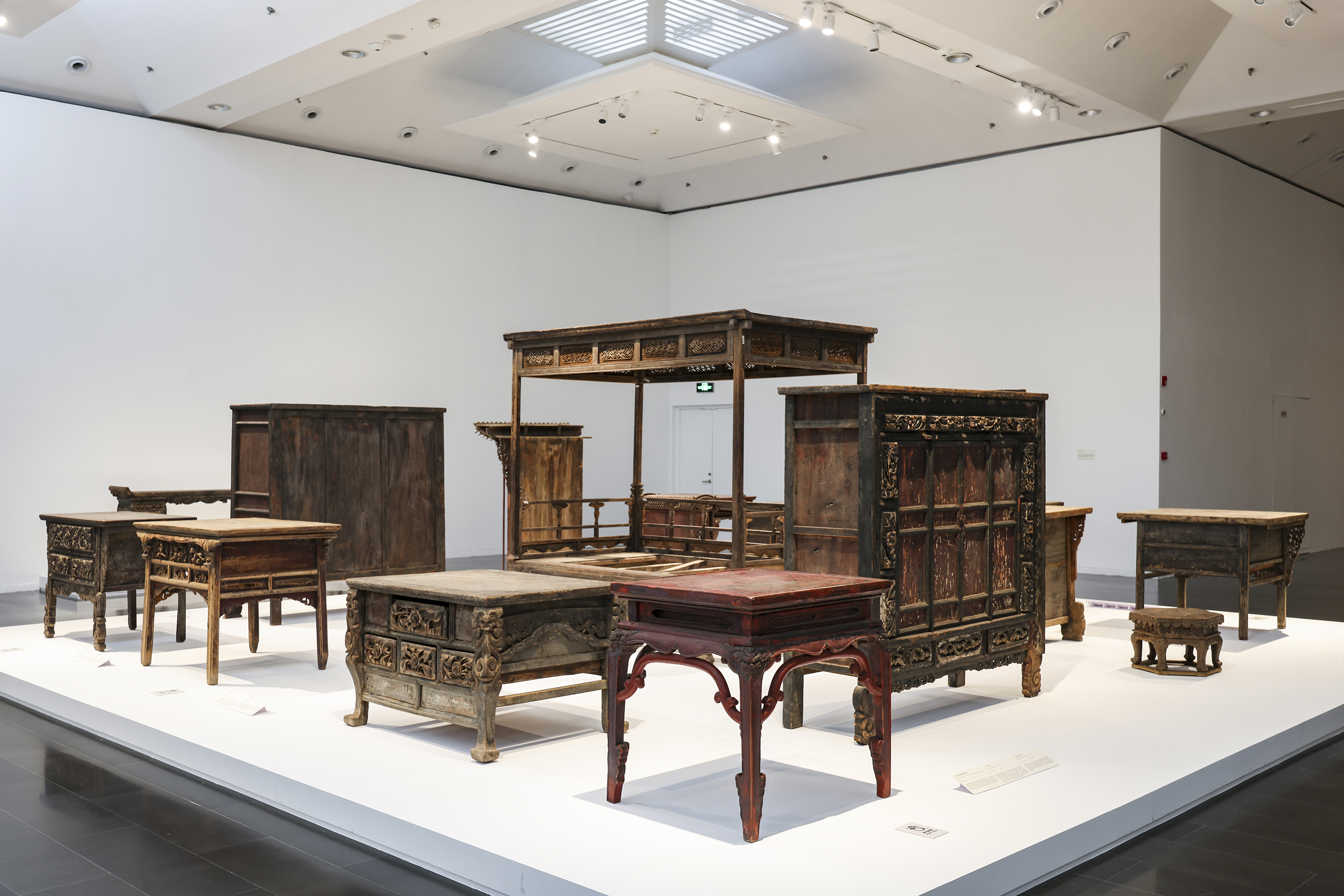
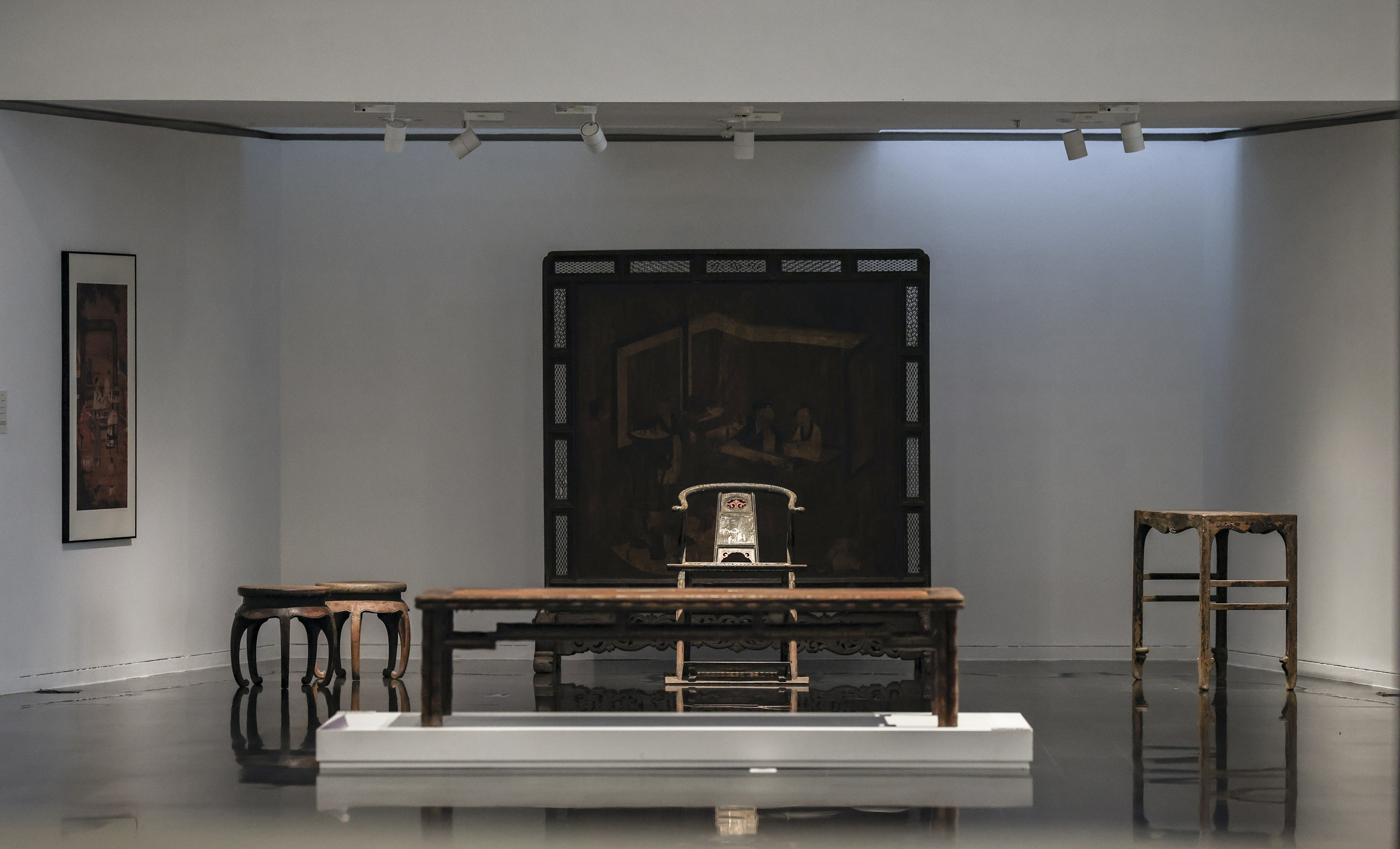
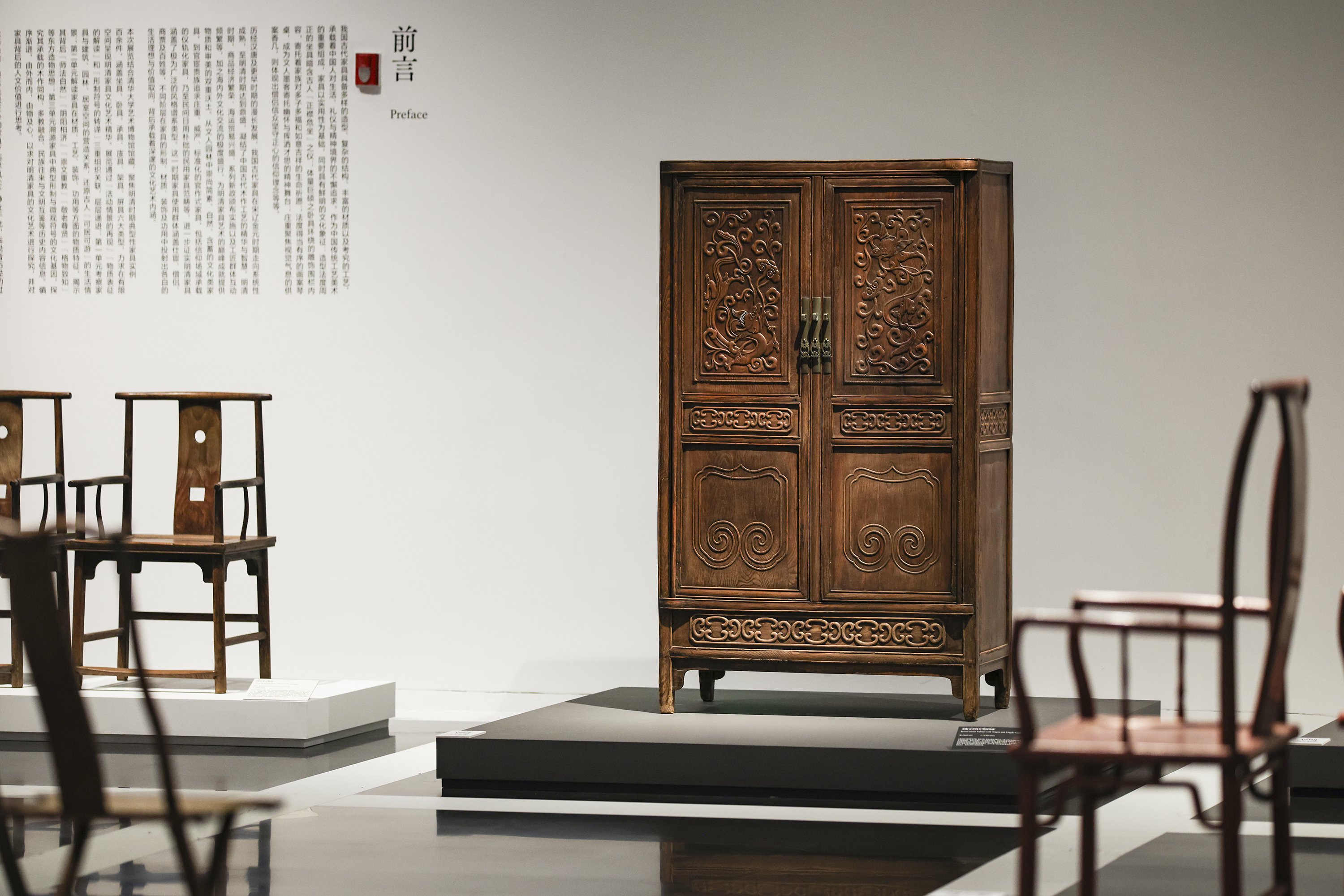
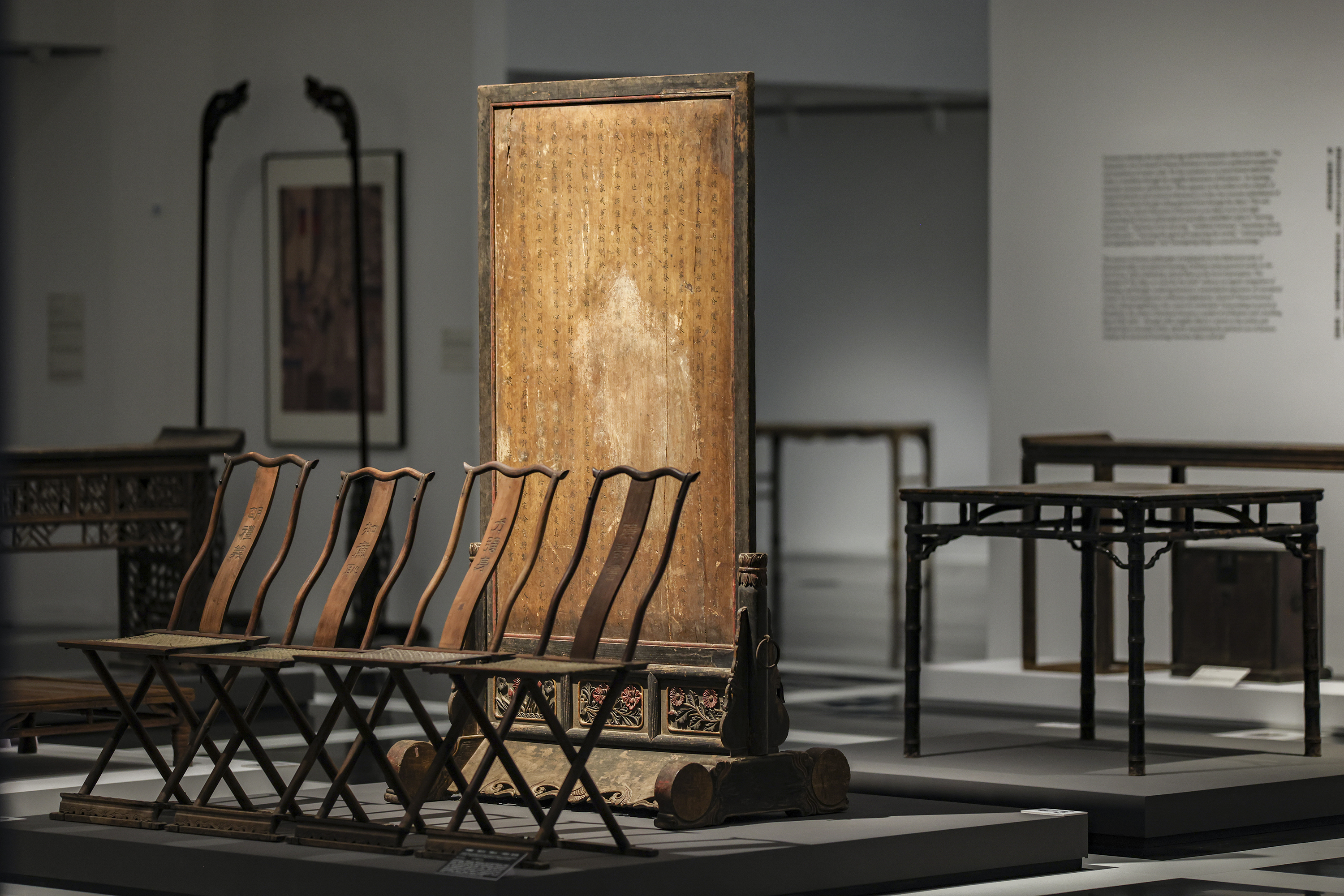
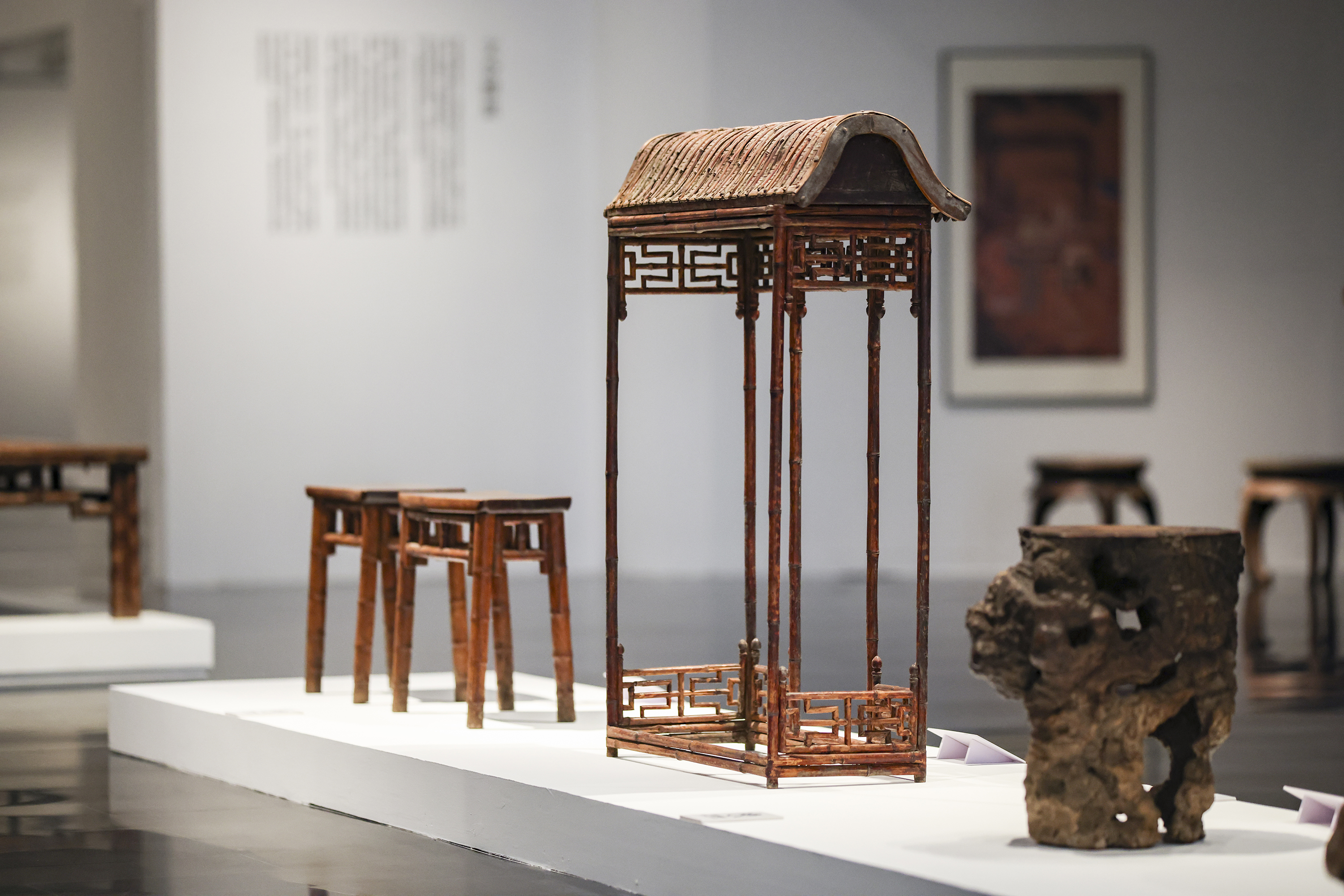
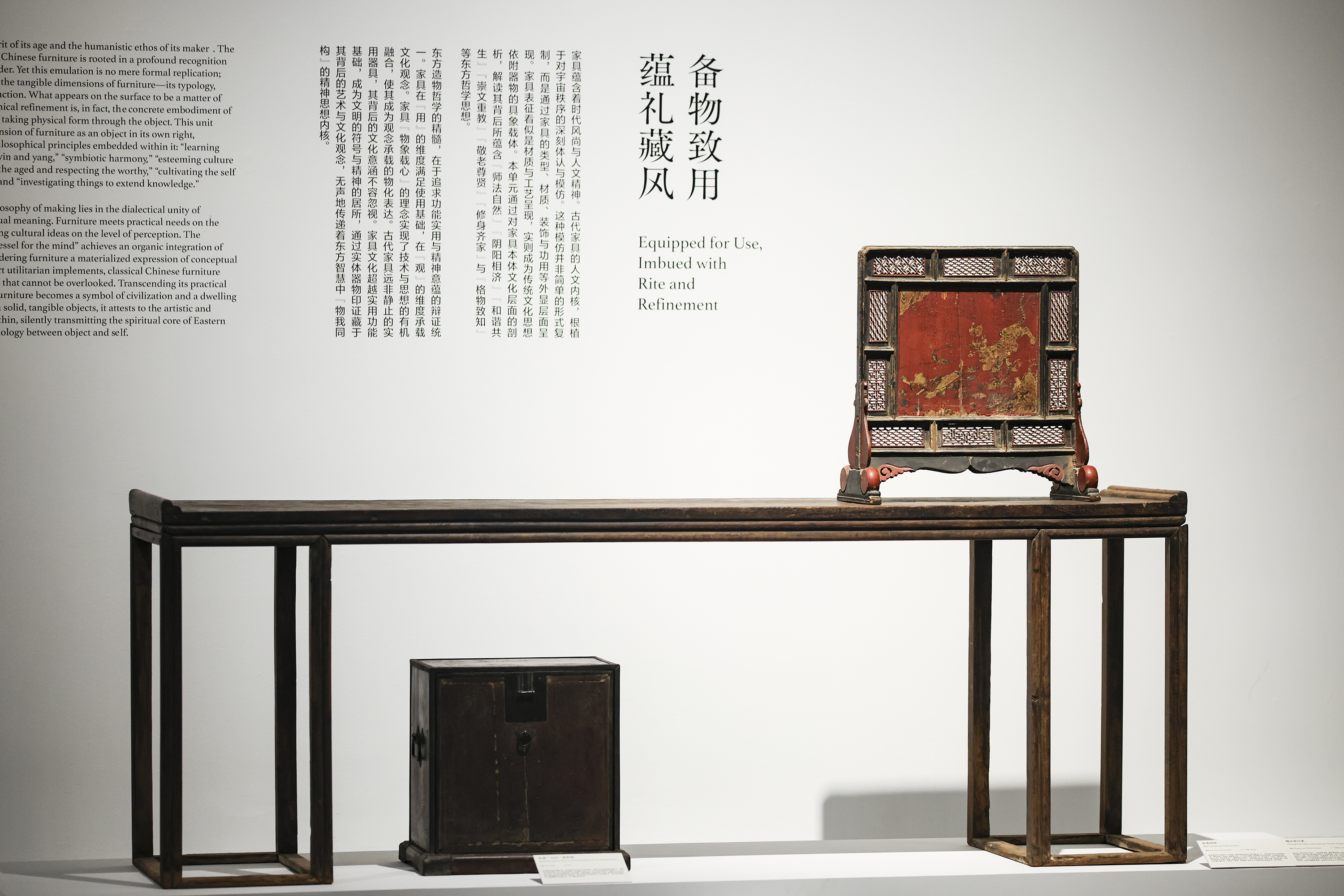
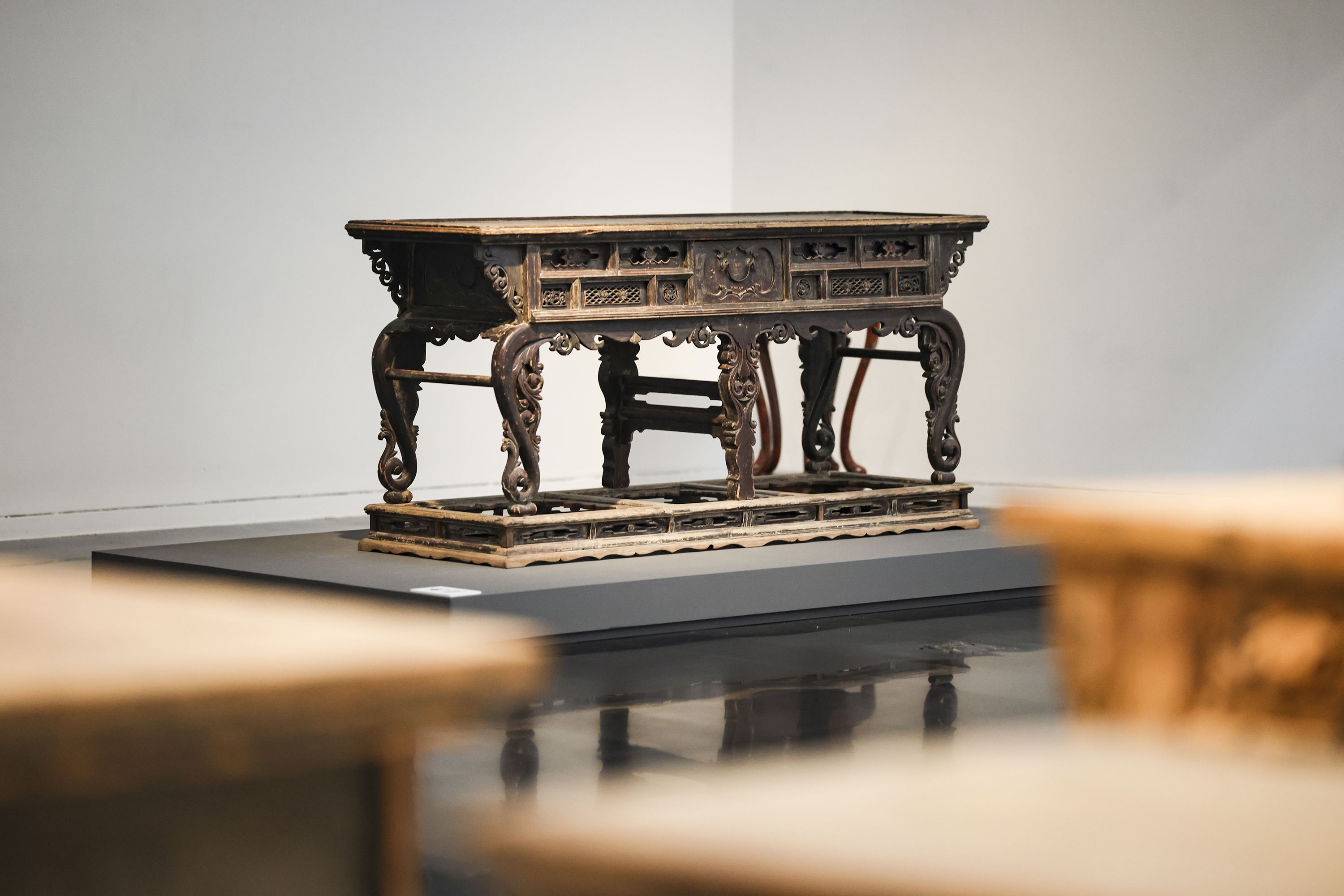
Drawing on the collection of the Tsinghua University Art Museum, this exhibition brings together over one hundred representative examples of Ming and Qing furniture, encompassing six major categories—seating, bedding, supporting pieces,storage, shelves and racks, and screens—and strives to present the cultural and artistic essence of Ming and Qing furniture within a limited space. The exhibition is organized through three interrelated approaches—Reconstructing Lived Contexts, Interpreting Material Expressions, and Translating Formal Symbols—proceeding in a progressively layered manner. The first section examines the spatial relationships between furniture and architecture, gardens, and interior settings, recreating the ancient ideal of a dwelling that is at once inhabitable and traversable. The second section interprets the material characteristics of furniture in terms of medium, craftsmanship, decoration, and function, revealing the underlying Eastern principles of creation: “learning from nature,” “harmony of yin and yang,” “esteeming culture and education,” “honoring the aged and respecting the worthy,” and “investigating things to extend knowledge.” The third section traces the cultural DNA of canonical forms and micro-symbols in furniture, exploring the historical narratives they bear—such as the structural homology of woodworking, the fusion of multiple religious traditions, ethnic interactions, and civilizational exchanges. In an arc that moves from the outward to the inward, from the physical to the spiritual, the exhibition seeks to investigate the culture and art of Ming and Qing furniture and to reflect on the humanistic values embedded within these objects.
Works on show

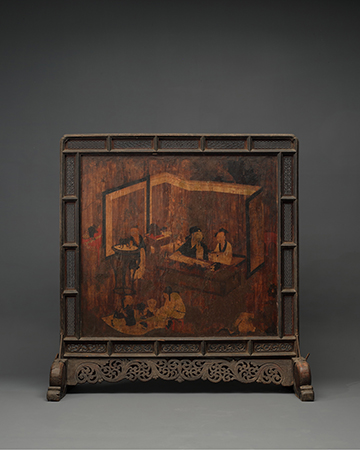
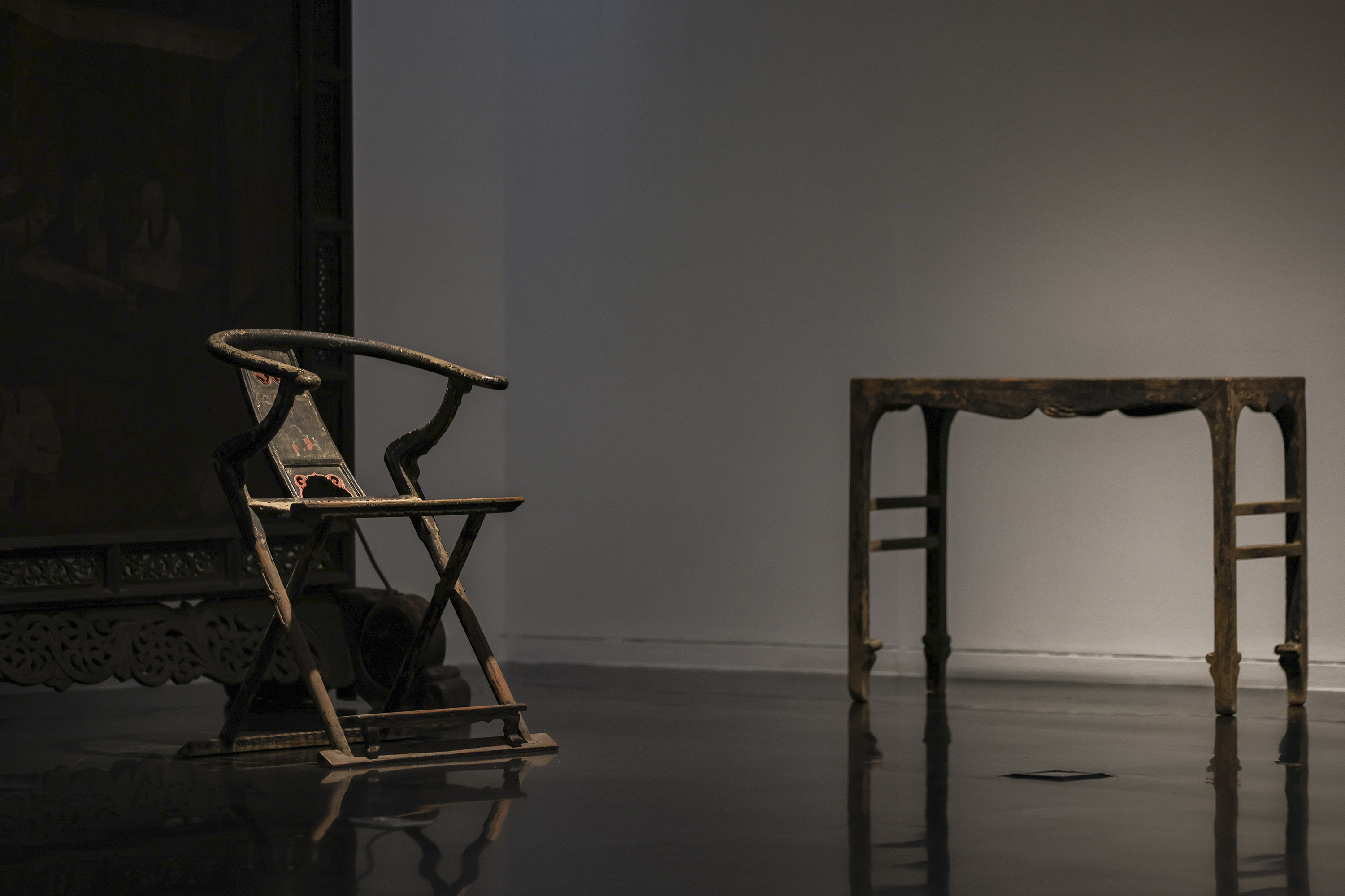
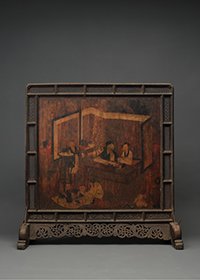
  • Floor Screen “Gathering of Ancient Sages”,
    15th-16th century

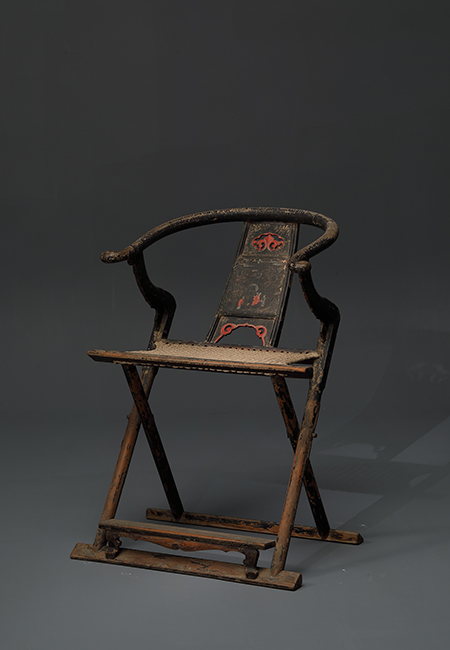
  • Folding Armchair with Curved Backrest, Black Lacquer with Polychrome Decoration, 17th–18th century

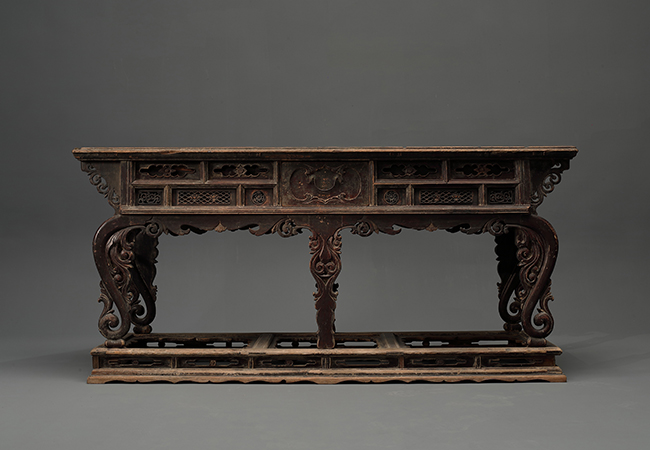
  • Offering Table with Cabriole Legs and Platform Base,
    13th–15th century

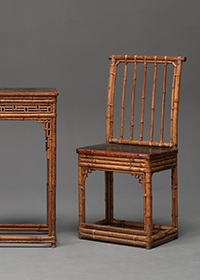
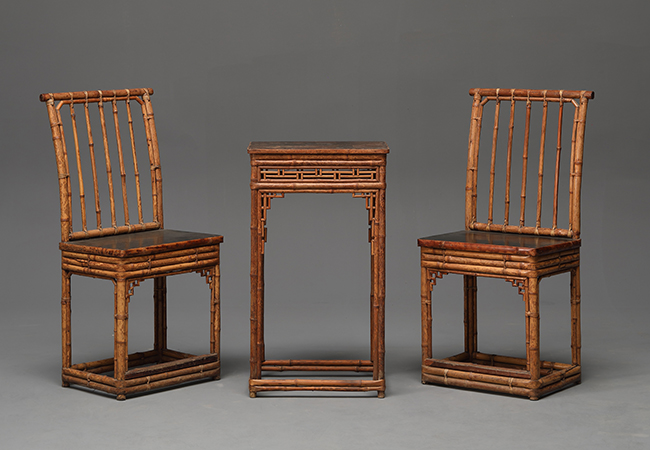
  • Bamboo Side Chair (Pair),
    17th–18th century

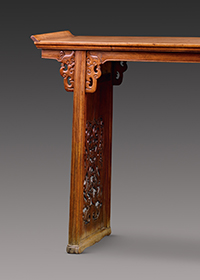
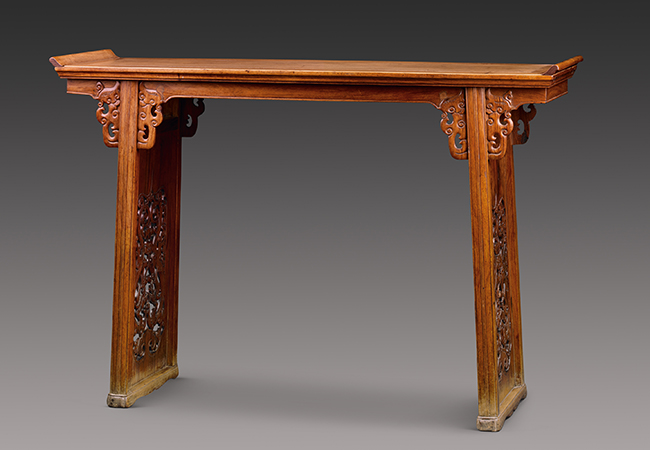
  • Flaring-Tip Table, Huanghuali rosewood, 125cm×30cm×98cm, 17th–18th century

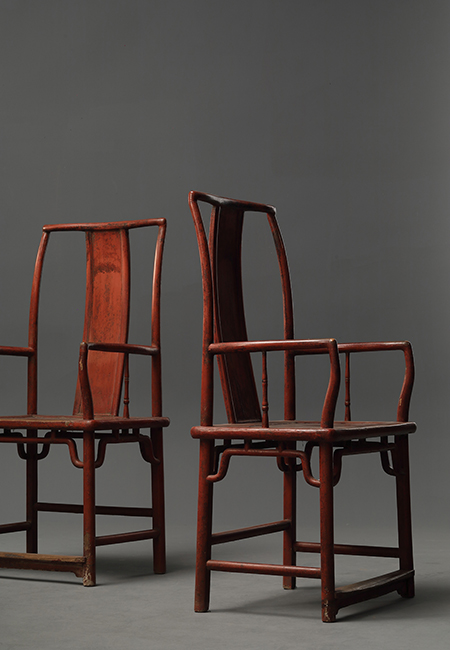
  • Red-Lacquered Southern Official’s Hat Armchair (Nanguanmao Yi) (Pair),
    17th–18th century

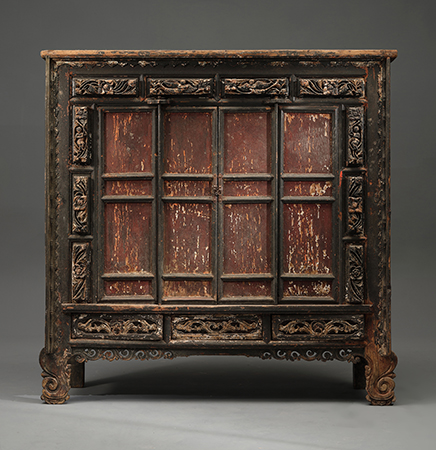
  • Four-Door Sutra Cabinet,
    14th–15th century

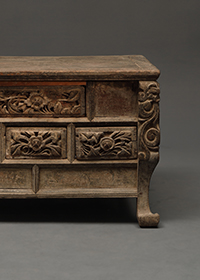
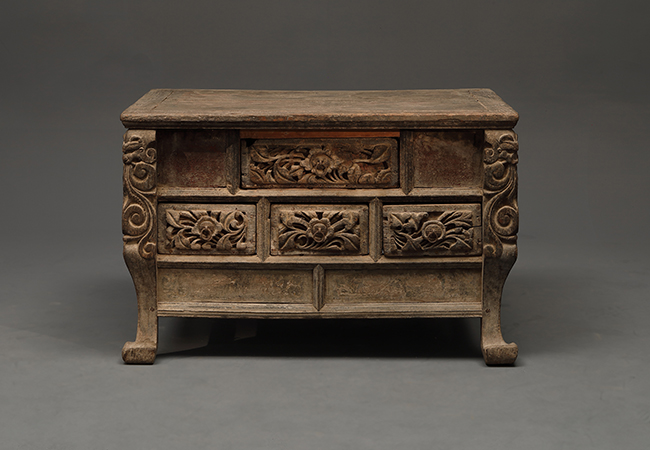
  • Altar Table in Chest-with-Drawers Style, 12th–14th century

Exhibition Space

Share

相关活动